Roof Repairs Succasunna NJ for Better Drainage and Gutter Performance
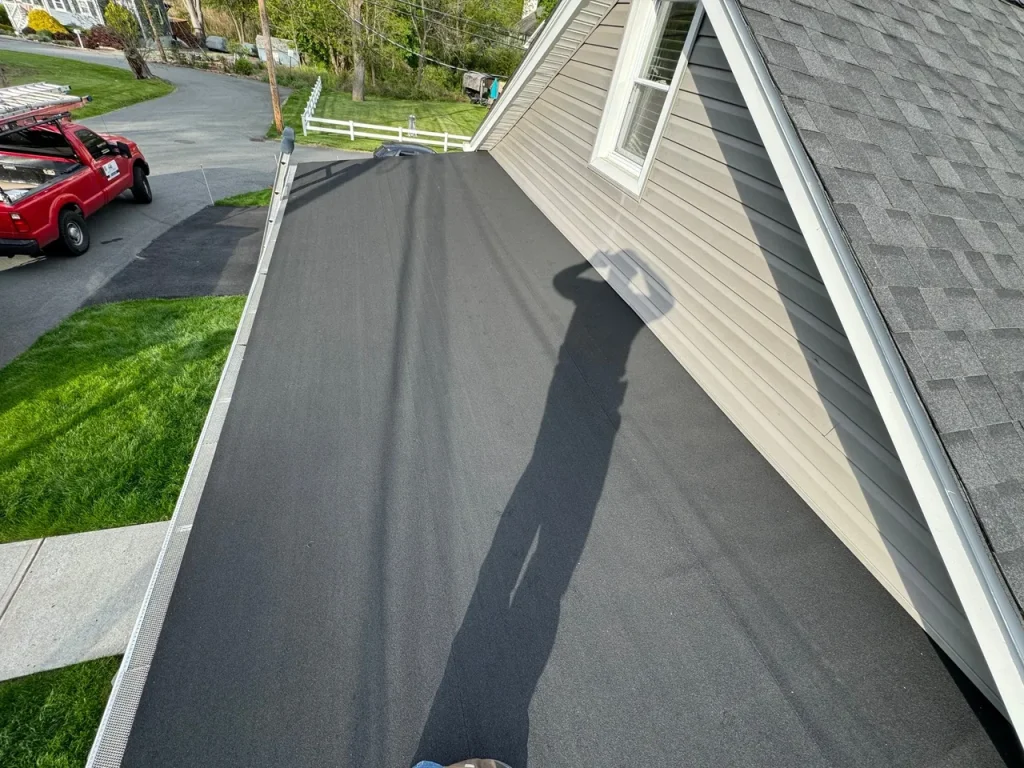
A roof does more than keep rain out. It manages where water goes, how fast it moves, and whether it leaves your home quietly or creates trouble on the way down. In Succasunna, that matters more than many homeowners realize. Rooflines here see the full range, summer downpours, leaf-heavy autumn gutters, winter ice, and spring freeze-thaw cycles that test every weak seam and fastener. When drainage starts to fail, the roof is usually part of the story, even if the first symptom shows up in a gutter, fascia board, or damp basement corner.
That is why smart Roof Repairs often begin with water behavior, not just shingles. A missing tab or lifted flashing might look minor from the yard, but if it pushes runoff under the roof edge or overloads one gutter section, the damage spreads. I have seen homes where the gutter company was called three times, yet the real issue sat ten feet higher, a shallow dip in the decking, a poorly integrated drip edge, or a repaired valley that never shed water correctly after the last storm.
Homeowners searching for Roof Repairs Succasunna NJ often start with a leak stain or overflowing gutter. Those are real problems, but they are also clues. The bigger question is how the entire roof drainage system is performing as one assembly. Roof plane, underlayment, flashing, drip edge, gutters, downspouts, soffits, and grading around the foundation all work together. If one part slips, the others take on more stress than they were built for.
What better drainage actually looks like
Good drainage is not dramatic. Water lands on the roof, follows the designed slope, reaches the edge without pooling, enters the gutter without overshooting it, travels to downspouts without backing up, and discharges far enough from the home to protect the foundation. There should be no dark streaking under eaves, no recurring ice at the same corner, no mulch trenches beneath a downspout, and no peeling paint on fascia after every wet season.
On a healthy roof, the signs are subtle. Shingles lie flat. Valleys stay clear. Flashing sits tight where roof meets wall, chimney, or vent. Gutters keep their pitch and stay attached along the fascia. The system looks uneventful because it is doing its job. Once that balance changes, the symptoms often appear in places that feel unrelated. Water can wick behind gutter aprons and rot the roof edge. It can collect at nail penetrations and stain a ceiling several feet away from the actual failure point. It can push ice dams into attic insulation, raising indoor humidity and causing mold concerns that seem at first like a ventilation problem alone.
The practical goal of Roof Repairs is to restore the roof’s ability to shed water predictably. Sometimes that means replacing a section of damaged shingles. Sometimes it means correcting a detail that was never right in the first place.
Why Succasunna homes often struggle with roof drainage
Succasunna’s seasonal pattern puts roofs through repeated expansion, contraction, saturation, and drying. Asphalt shingles age under UV exposure in summer, then become brittle in the cold. Leaves and seed pods collect in valleys and gutters in fall. Snow sits, melts, and refreezes at eaves in winter, especially where attic heat escapes unevenly. Spring brings heavy rain that quickly exposes any low-slope issue, flashing defect, or clogged downspout.
Local tree cover is another common factor. Mature maples and oaks look great from the street, but they fill gutters fast and keep portions of the roof shaded longer after storms. That slows drying time and can encourage moss or granule wear in specific areas. Shaded roof sections often age differently than sun-exposed ones, and that uneven wear affects drainage. Water rarely follows the neat textbook path once debris, surface roughness, and edge deterioration enter the picture.
Roof geometry matters too. Many homes in the area have intersecting rooflines, dormers, attached garages, and additions built at different times. Every transition creates a place where water can accelerate, hesitate, or collect. Valleys are especially important. A valley handles concentrated runoff from two roof planes at once, so even a small defect there can create outsized problems. If a homeowner tells me the gutter overflows only on one side, during only certain storms, I immediately think about what is happening uphill from that gutter line.
Small defects that cause oversized water problems
The most expensive roof damage often starts with details that seem almost trivial. A lifted shingle edge can redirect water toward a nail line. A bent drip edge can let runoff cling to the metal and roll behind the gutter instead of into it. A tiny gap in step flashing can feed water into wall sheathing for months before anyone notices. The roof does not need a gaping hole to fail. It only needs one path for water that should not exist.
This is where experience matters. Two homes can have the same visible symptom and need very different repairs. An overflowing gutter could come from a clog, a poor gutter pitch, roof runoff overshooting because of steep slope, a damaged starter course, or a fascia problem that changed the gutter angle. Replacing the gutter without correcting the roof edge detail is money wasted.
A repair that improves drainage usually addresses both the water entry point and the flow path. It is not enough to patch the obvious spot if runoff is still being forced into the same vulnerable area. That is one reason repeated patchwork repairs often disappoint homeowners. The leak may stop for a few months, but the water management problem remains.
The roof edge is where many drainage failures begin
Roof edges do quiet, essential work. They guide runoff off the roof and into the gutter while protecting the decking and fascia from constant exposure. When the edge assembly is wrong, everything below it suffers. In practical terms, that means swollen fascia boards, rusty gutter spikes, separated gutter seams, and staining on siding beneath the eave.
Drip edge installation is a good example. If it is missing, too short, or tucked incorrectly relative to the underlayment, water can travel backward by capillary action or wind pressure. I have seen homes where the gutter itself looked brand new, but the roof decking behind it had already softened because runoff kept curling back under the shingle edge. The owner thought the gutters were failing. The gutters were only catching the blame.
Starter shingles also matter more than people think. Along the rake and eave, the starter course helps lock down edge shingles and maintain a clean water path. When wind loosens that edge, the first shingle course is more vulnerable, and water can get an opening right where it meets the gutter line. That is often why a leak or overflow appears to come and go with wind direction.
For homeowners considering Roof Repairs Succasunna NJ, a close look at the roof edge can reveal whether the problem is simply wear or a design detail that needs correction.
Gutters cannot outperform a bad roof
There is a common assumption that bigger gutters solve drainage issues. Sometimes larger gutters help, especially on steep roofs or areas with concentrated valley discharge, but capacity is only one piece of performance. If the roof sends water unevenly, shoots it past the trough in heavy rain, or feeds debris into the same corner every week, a larger gutter may still struggle.
A gutter system works best when the roof gives it a fair chance. That means proper shingle alignment at the edge, solid fascia backing, suitable apron or drip edge transition, and no hidden dips that accelerate runoff unexpectedly. Downspout placement matters too. A long gutter run with too few outlets can overflow even when the trough is clean. Yet again, the question is not only what the gutter is doing, but what the roof is asking it to do.
One home I inspected had a recurring overflow at the front entry during storms. The owner had already installed gutter guards and upgraded downspouts. The real problem was a repaired valley above the entry that had a slight hump near the lower third. Water hit that hump, fanned sideways, and dumped in one concentrated sheet. The gutter was never receiving a controlled flow. Correcting the valley and edge detail solved what two prior gutter service calls had not.
Warning signs worth taking seriously
Most drainage failures announce themselves before major interior damage appears. Homeowners often notice these signs in passing and put them off because nothing seems urgent yet. That delay can turn a manageable repair into sheathing, fascia, insulation, or ceiling work.
- Gutters overflow in the same spot even after cleaning.
- You see dark streaks, peeling paint, or soft wood along the fascia or soffit.
- Shingles near valleys or roof edges look curled, lifted, or unusually worn.
- Ice forms repeatedly at one eave section while other edges stay relatively clear.
- Mulch washes out or trenching appears below a downspout after storms.
These clues do not always point to the same repair, but they nearly always point to a drainage issue that deserves a proper roof-level inspection.
Valleys, flashing, and transitions deserve extra attention
If I had to pick the areas most likely to separate average work from lasting work, I would point to valleys and flashing details. These are the places where roofs stop being simple planes and start dealing with concentrated water. Water speeds up in valleys. Wind pressure shifts around dormers and chimneys. Snow collects and melts unevenly where roof planes intersect. Repairs in these areas need more judgment than a straightforward shingle replacement in the middle of an open slope.
Open valleys, woven valleys, and closed-cut valleys each behave differently. There is no universal best choice for every roof. The right approach depends on roof pitch, shingle type, runoff volume, and the condition of surrounding materials. A valley repair that looks neat from the ground may still be wrong if it traps debris or exposes fasteners where they will stay wet.
Flashing is similar. Step flashing at sidewalls should work with the shingles, not fight them. Counterflashing around masonry needs to remain sealed without depending entirely on caulk. Pipe boots should sit flat and match the roof’s age and condition. When flashing repairs rely too heavily on surface sealants alone, they tend to age poorly in New Jersey’s temperature swings. Sealant has a place, but it should support a correct mechanical detail, not substitute for one.
Ice dams and winter drainage stress
Winter exposes drainage weaknesses with unusual honesty. When heat escapes from an attic, snow melts higher on the roof and runs down to colder eaves, where it refreezes. That ridge of ice traps more meltwater behind it, and water then backs up under shingles. Many people describe this as a roofing problem, and they are right, but it is also a drainage problem, ventilation problem, and insulation problem all at once.
A roof repair contractor who only treats the symptom by replacing damaged shingles may help in the short term, but the pattern often returns. The better approach is to pair the roof repair with an assessment of attic heat loss, intake and exhaust ventilation, and eave detailing. In some cases, improving drainage also means making sure the roof surface stays uniformly cold in winter so meltwater does not refreeze where it should be exiting.
Ice dams are especially hard on gutters. The extra weight can pull them away from the fascia, flatten their pitch, and open seams. Once that happens, spring rains exploit the new misalignment. A homeowner may think winter has passed and the issue is gone, when in fact winter quietly set up the next wet-season problem.
Repair versus replacement, and where the line usually sits
Not every drainage problem requires a full roof replacement. Some do, many do not. The decision depends on age, extent of damage, number of prior repairs, condition of decking, and whether the drainage issue comes from isolated failure or system-wide wear.
A targeted repair often makes sense when the roof still has meaningful service life left and the issue is clearly localized. That might include replacing damaged shingles near an eave, rebuilding a problem valley, correcting flashing at a dormer, rehanging gutters after fascia repair, or adding proper edge metal where it was missing. These repairs can significantly improve drainage if they solve the root cause.
Replacement becomes the smarter financial move when defects are widespread or when fixing one area would leave several others near failure. If granule loss is advanced, multiple penetrations show aging sealant, edges are brittle, and sheathing is soft in more than one section, a series of repairs can start to resemble a piecemeal replacement at a higher total cost. Good contractors should be candid about that distinction. Homeowners deserve a recommendation based on performance and value, not just on what is easiest to sell.
What a thoughtful repair process should include
The strongest Roof Repairs start with observation, not assumptions. A contractor should inspect the roof surface, roof edge, gutters, downspouts, fascia, soffits, and the ground-level discharge area. If possible, the evaluation should happen with an eye toward how water moves during actual storms. Staining patterns, debris lines, and wear marks often reveal the route water has been taking for months.
A useful repair plan usually includes a few essentials:
- Identification of the primary failure point and any secondary damage it caused.
- Explanation of whether the issue is wear, storm damage, installation error, or deferred maintenance.
- A clear scope for both roof repairs and any related gutter or fascia corrections.
- Notes on materials being used, especially flashing, edge metal, underlayment, and shingle match.
- A realistic view of what the repair will solve now, and what may need attention later.
That level of clarity protects the homeowner and improves the result. It also helps prevent the all-too-common cycle of fixing symptoms in isolation.
Maintenance that supports repair work
A well-executed repair lasts longer when the surrounding system gets basic care. That does not mean constant fussing over the roof. It means a few habits that reduce stress on the repaired area and keep drainage consistent through the year.
If trees overhang the roof, seasonal gutter cleaning is not optional. In heavily wooded settings, once a year may not be enough. Downspouts should discharge away from the foundation, ideally far enough that the soil does not stay saturated. Splash blocks help, but extensions or underground drains are often better when grading is tight. Roof valleys should be kept free of leaf mats, especially before winter. After major wind events, a visual check from the ground can catch displaced shingles before the next storm turns them into leaks.
Homeowners should also watch how water behaves, not just whether it leaks. Stand outside during a hard rain once or twice a year. You can learn a lot in ten minutes. If water sheets over the gutter front, spills at one elbow, or drips behind the fascia, the roof and gutter https://www.google.com/maps?cid=8833126904634939522 system are telling you exactly where to look.
The value of local judgment
Roofing advice gets oversimplified online. Generic tips can be useful, but they do not replace local judgment. A drainage detail that performs well in a dry climate may struggle here. A gutter guard that looks impressive in a brochure may become a leaf bridge under dense tree cover. A patch that holds in mild weather may fail after a New Jersey freeze-thaw cycle.
That is why local experience matters in Roof Repairs Succasunna NJ. Contractors who know the housing stock, the storm patterns, and the typical failure points can often spot causes faster and design repairs that fit the home instead of applying a canned answer. They know which valleys tend to clog, which neighborhoods have more shade exposure, and how winter conditions affect eaves on older colonials versus newer roof systems on additions.
Professional judgment also means admitting when multiple trades are part of the solution. A roof drainage problem may overlap with gutter adjustment, soffit repair, attic ventilation work, or exterior grading changes. The best results come when those connections are recognized early.
Spending wisely on roof drainage improvements
Homeowners naturally want repairs that hold up, but they also want to spend carefully. The smartest spending is usually not on the flashiest upgrade. It is on the detail that removes the source of recurring stress. If one valley is dumping too much water into a short gutter run, reworking that valley and adding a downspout may do more than replacing every gutter on the house. If repeated overflow is rotting fascia, repairing the wood and correcting the edge transition is money better spent than simply hanging another new gutter over compromised backing.
There is also a timing advantage to dealing with drainage problems early. Wet wood rarely gets stronger with time. Minor deck softness can become sheathing replacement. A loose gutter can become fascia carpentry. A small leak can compromise insulation and interior finishes. Early repairs are not just cheaper in theory. They are often simpler, cleaner, and less disruptive.
For many homes, the practical aim is not perfection. It is reliable water control through every season. That means a roof that sheds cleanly, gutters that receive and move the runoff without strain, and a home exterior that dries properly after storms. When those pieces work together, you notice the absence of problems more than the presence of the system. That is exactly how it should be.
When a roof is repaired with drainage in mind, the benefits extend beyond the shingles. Gutters perform better. Fascia lasts longer. Ice risk drops. Basements stay drier. Siding and trim age more gracefully. The home handles weather with less drama and fewer surprise expenses. For Succasunna homeowners, that kind of quiet performance is often the best measure of a repair done right.
Royalty Exteriors
Address: 151 NJ-10 Ste 103A, Succasunna, NJ 07876
Phone number: +19733337234
FAQ About Roof Repairs Succasunna NJ
How much should I pay for roof repairs?
Most homeowners pay an average of $900 to $1,200 for roof repairs, with typical projects ranging from $150 to $3,000+ depending on the severity of the damage.
What are the most common roof repairs?
The most common roof repair is fixing water leaks by replacing damaged, cracked, or missing asphalt shingles and sealing compromised flashing.
Does homeowners insurance pay for roof repairs?
Homeowners insurance pays for roof repairs only if the damage is sudden and accidental, such as from a storm, hail, or a falling tree.